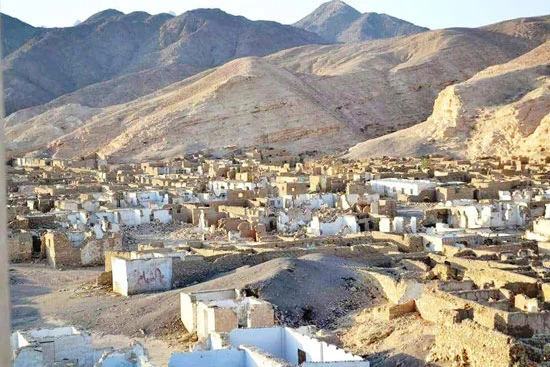
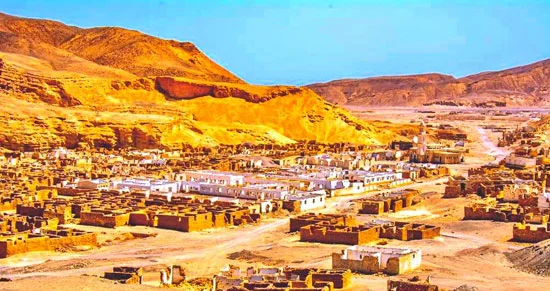
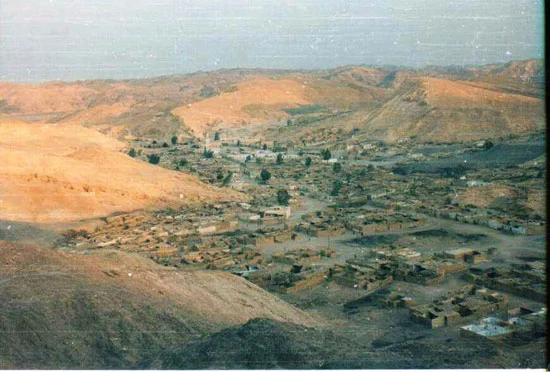
Umm Al-Huwaitat is not just an abandoned village on the edge of the Eastern Desert in Safaga, but one of the most mysterious and fascinating places in Egypt. Located near Hurghada, the village was once full of life before turning into silent ruins that tell stories from the past and attract curious visitors.
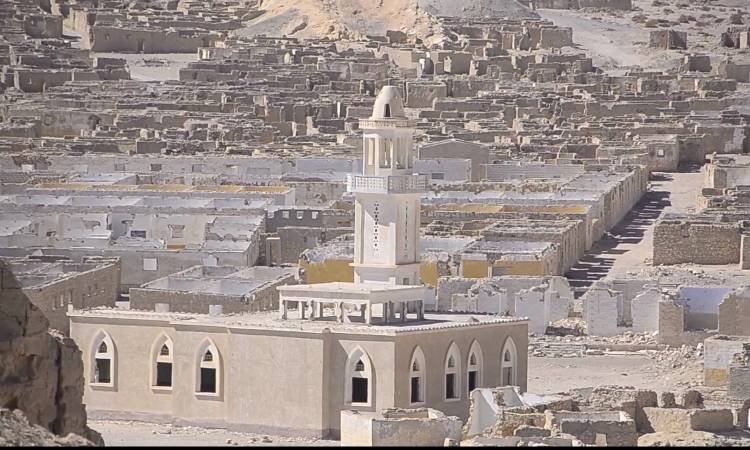
The village was established in the early 20th century around phosphate mines, attracting workers from different parts of Egypt to work in mining. As the mining industry grew, Umm Al-Huwaitat developed quickly. Houses and important facilities such as a school, hospital, and mosque were built, creating a complete community full of life.
The village became an example of teamwork and coexistence in the harsh desert environment, as the residents worked hard to build a better future despite difficult conditions.
However, this prosperity did not last forever. Over time, phosphate resources began to decrease, and mining activities slowly stopped. As a result, people left the village and abandoned their homes. With time, Umm Al-Huwaitat turned into a ghost town covered by sand and surrounded by silence.
Many stories and legends spread among visitors about why the village was abandoned. Some people talk about tragic events and mysterious circumstances, while others believe the reasons were simply economic.
Umm Al-Huwaitat is known for its unique architecture that reflects the spirit of that historical period. Many stone buildings are still standing despite the passing of time, creating a dramatic scene that attracts photographers and adventure lovers.
Its location in the middle of the desert also gives it a special beauty, especially during sunrise and sunset, when the golden colors mix with the shadows of the old buildings, making the village look like a living painting.
The attraction of Umm Al-Huwaitat is not only in its history, but also in the experience it offers visitors. Walking through the village feels like traveling back in time and discovering the remains of a once lively community.
It is also a perfect destination for explorers who enjoy walking through abandoned streets and observing the details of old houses that still carry traces of their former residents.
In the end, Umm Al-Huwaitat remains a living witness to the changes of time and a reminder of how history and nature can shape places in powerful ways. It is not just a group of ruins, but a human story filled with ambition, struggle, and disappearance — proving that every place has a story worth telling.