Location and general character Tombs of Al-Bagawat
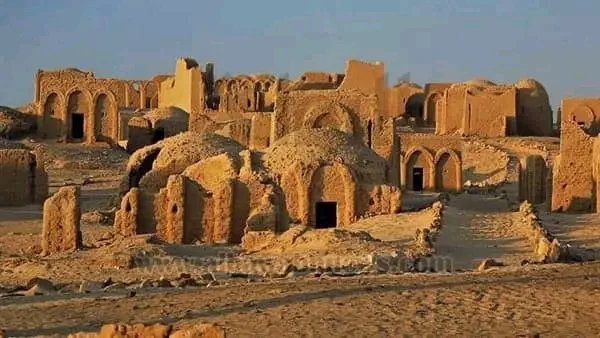
Tombs of Al-Bagawat are considered one of the most prominent historical landmarks representing the early beginnings of Christianity in Egypt. This ancient necropolis stands in the desert of the New Valley as a testimony to the early Coptic communities who chose isolation in the harsh desert environment to preserve their faith and heritage.
In the quietness and stillness of the oases, visitors feel as if they are walking through pages of history that take them back many centuries.
are located behind the Temple of Hibis in Kharga City, and they date back to the period between the 2nd and 7th centuries AD.
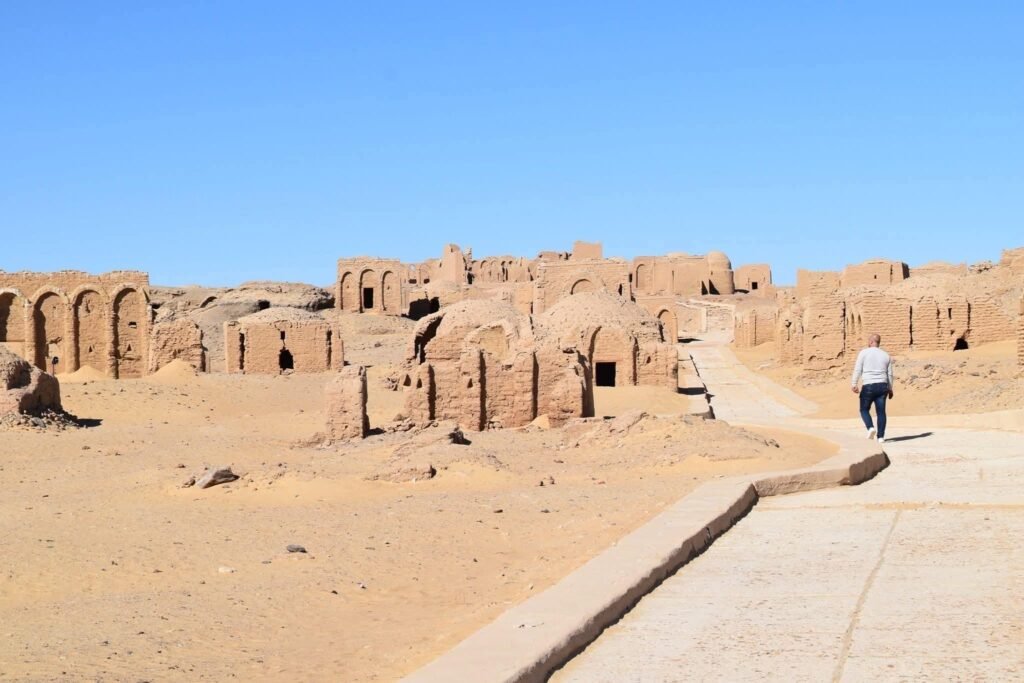
The site is named “Al-Bagawat” in reference to the word “domes,” as many of the tombs are topped with dome-like structures. These tombs were built using mudbrick in a simple architectural style that suits the harsh desert environment.
The archaeological Tombs of Al-Bagawat in Kharga City
Nature and formation
Tombs of Al-Bagawat are characterized by a layout that resembles an abandoned city, containing around 263 architectural structures. These range from small tombs to larger ones, many of which are topped with externally decorated domes.
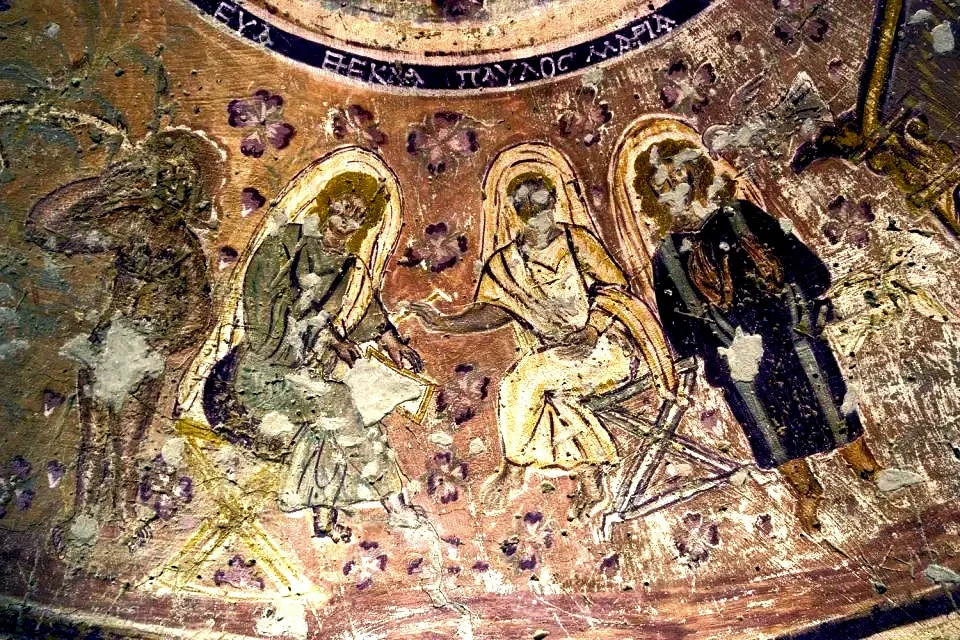
The walls of these domes feature artistic scenes inspired by the Torah and the Old Testament, such as the story of Noah, the sacrifice of Abraham, and the Exodus of the Israelites from Egypt. These paintings were executed in the fresco style, which involves mixing pigments with water to create durable wall art.
Despite the fragility of this artistic technique, the dry desert climate has helped preserve these paintings for centuries, allowing them to remain a visual testament to the artistic and spiritual creativity of early Christians to this day.
The tombs are also rich with numerous inscriptions and carvings in multiple languages, such as Greek, Latin, Coptic, and Arabic, reflecting a state of cultural and religious interaction between different peoples and eras.
Tombs of Al-Bagawat are characterized by a layout that resembles an abandoned city, containing around 263 architectural structures. These range from small tombs to larger ones, many of which are topped with externally decorated domes.
The walls of these domes feature artistic scenes inspired by the Torah and the Old Testament, such as the story of Noah, the sacrifice of Abraham, and the Exodus of the Israelites from Egypt. These paintings were executed in the fresco style, which involves mixing pigments with water to create durable wall art.
Despite the fragility of this artistic technique, the dry desert climate has helped preserve these paintings for centuries, allowing them to remain a visual testament to the artistic and spiritual creativity of early Christians to this day.
The tombs are also rich with numerous inscriptions and carvings in multiple languages, such as Greek, Latin, Coptic, and Arabic, reflecting a state of cultural and religious interaction between different peoples and eras.
Engravings and murals of the Tombs of Al-Bagawat
Main landmarks inside the necropolis Tombs of Al-Bagawat
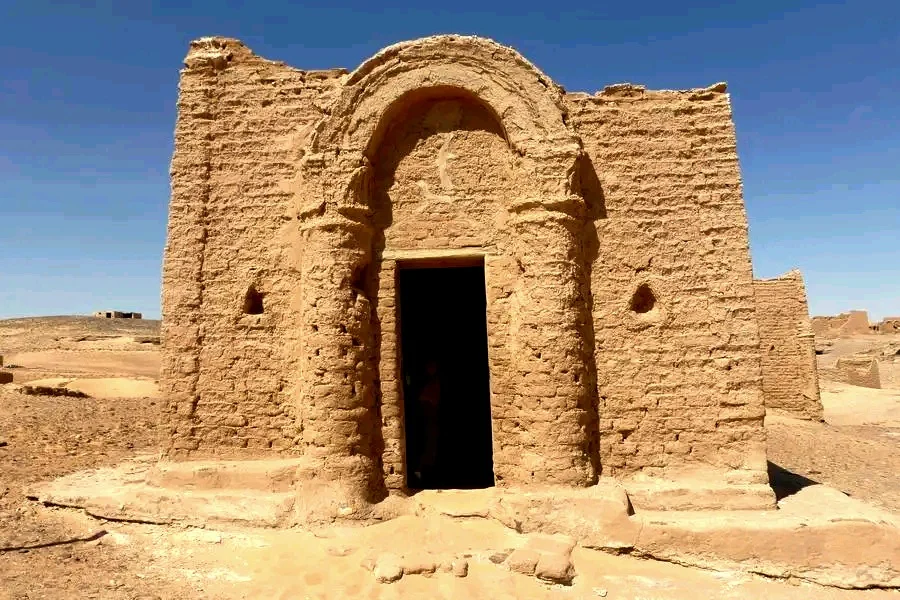
One of the most prominent landmarks of Tombs of Al-Bagawat is the “Sanctuary of Peace,” distinguished by a peace symbol painted on its dome, and known to some researchers as the “Byzantine tomb.”
Another important feature is the “Exodus Sanctuary,” which depicts scenes from the story of the Exodus of the Israelites and Pharaoh’s pursuit of them, along with other religious and historical scenes.
The walls also bear graffiti left by visitors across different eras, numbering about 63 inscriptions, including 29 in Arabic, 19 in Greek, and 12 in Coptic. The oldest of these dates back to the 9th century AD, reflecting the continuous human connection to the site over time.
Near the necropolis, excavations have revealed the remains of the Ain Saaf dwellings, which were considered a main residential center for the local population. Meanwhile, the central church is located at the heart of the necropolis overlooking the old town of Kharga, and it consists of three aisles. It is believed to date back to the 5th century AD.
One of the most prominent landmarks of Tombs of Al-Bagawat is the “Sanctuary of Peace,” distinguished by a peace symbol painted on its dome, and known to some researchers as the “Byzantine tomb.”
Another important feature is the “Exodus Sanctuary,” which depicts scenes from the story of the Exodus of the Israelites and Pharaoh’s pursuit of them, along with other religious and historical scenes.
The walls also bear graffiti left by visitors across different eras, numbering about 63 inscriptions, including 29 in Arabic, 19 in Greek, and 12 in Coptic. The oldest of these dates back to the 9th century AD, reflecting the continuous human connection to the site over time.
Near the necropolis, excavations have revealed the remains of the Ain Saaf dwellings, which were considered a main residential center for the local population. Meanwhile, the central church is located at the heart of the necropolis overlooking the old town of Kharga, and it consists of three aisles. It is believed to date back to the 5th century AD.
Historical and human significance Tombs of Al-Bagawat
Tombs of Al-Bagawat are not only a burial site, but also a living document that records aspects of the daily life, spirituality, and artistic imagination of early Christians in Egypt.
They also reflect the ability of humans to adapt to the harsh desert environment and build a cohesive community that preserves its identity and heritage.
In conclusion, Tombs of Al-Bagawat remain one of the unique archaeological treasures in Egypt’s desert, where history blends with art and faith, standing as a living testimony to humanity’s journey in the search for safety, freedom, and the preservation of beliefs across the ages.
Tombs of Al-Bagawat are not only a burial site, but also a living document that records aspects of the daily life, spirituality, and artistic imagination of early Christians in Egypt.
They also reflect the ability of humans to adapt to the harsh desert environment and build a cohesive community that preserves its identity and heritage.
In conclusion, Tombs of Al-Bagawat remain one of the unique archaeological treasures in Egypt’s desert, where history blends with art and faith, standing as a living testimony to humanity’s journey in the search for safety, freedom, and the preservation of beliefs across the ages.
Peace Church Shrine
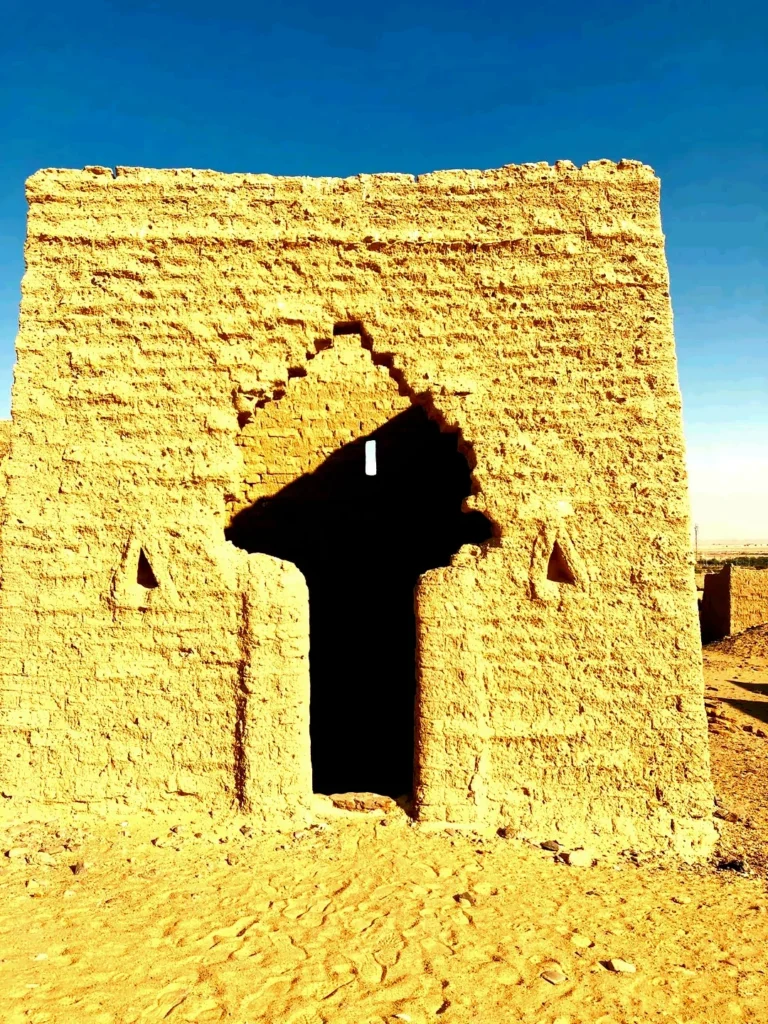
Entrance to the Sanctuary of the Exodus
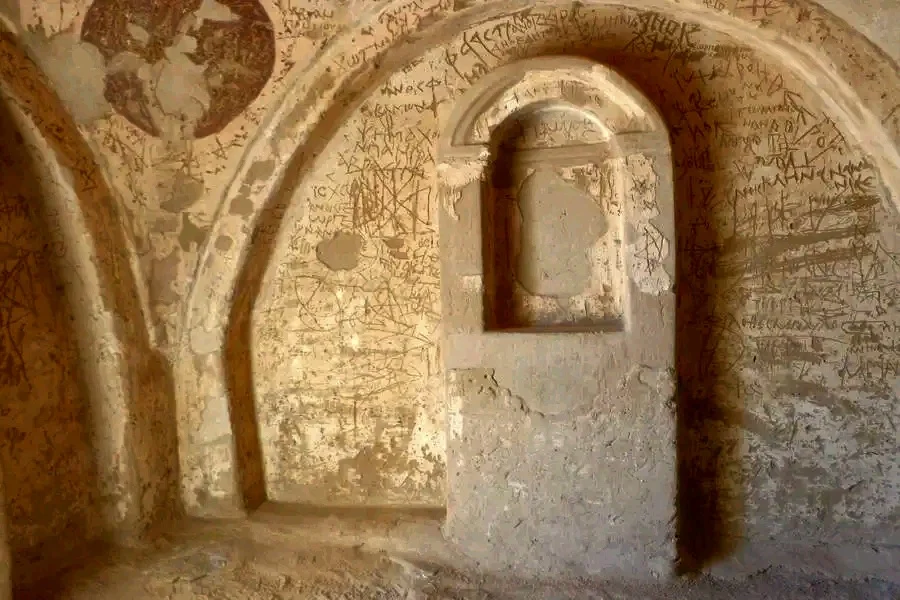
Inside one of the Tombs of Al-Bagawat
Tombs of Al-Bagawat in the oases… the treasures of early Christianity in the heart of the desert Tombs of Al-Bagawat