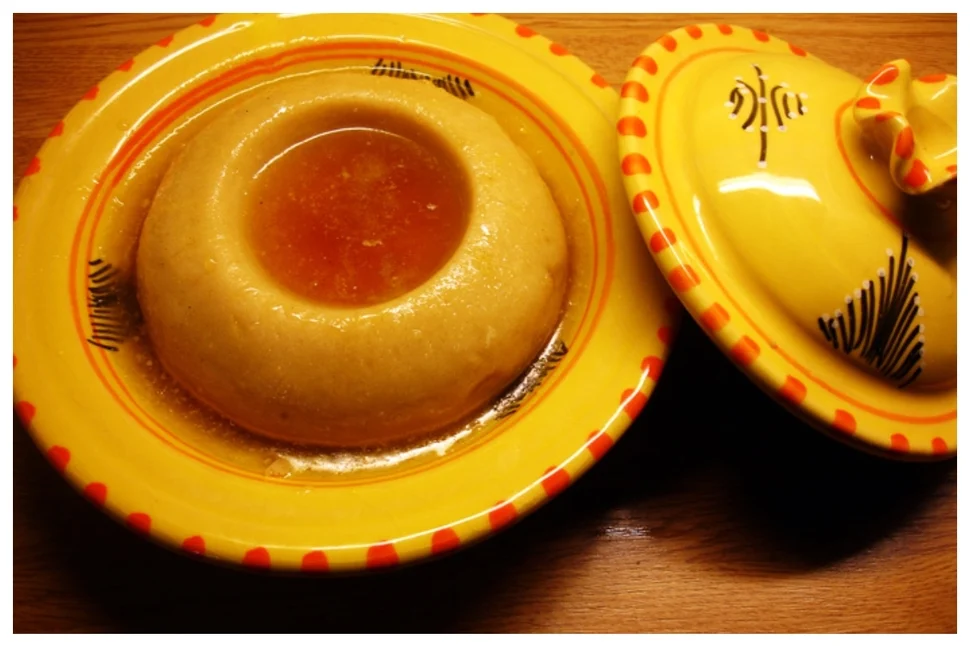
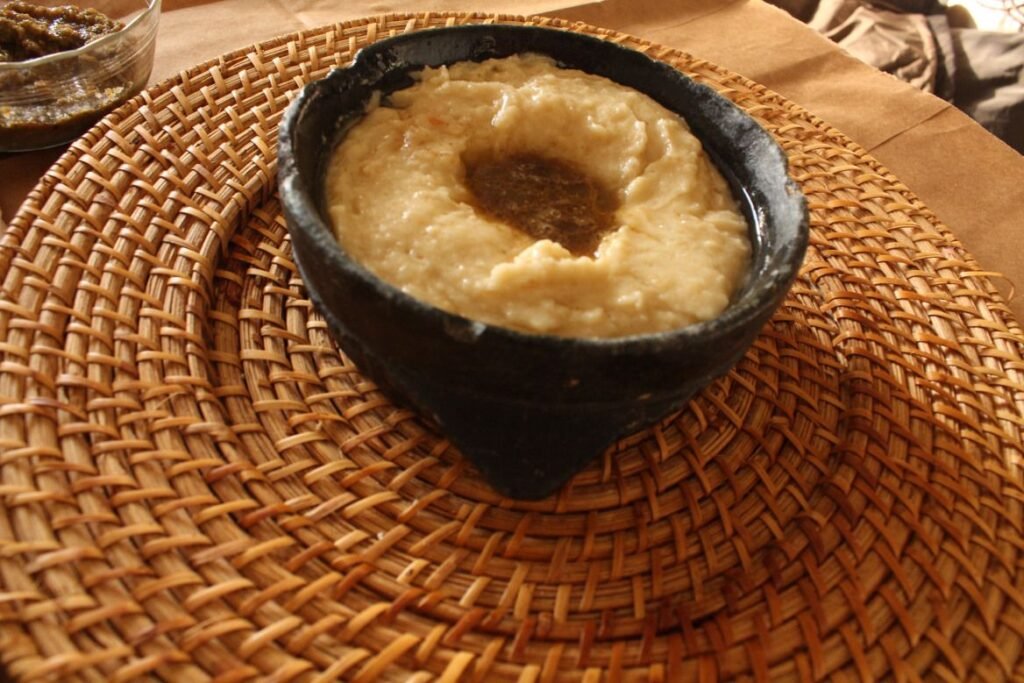
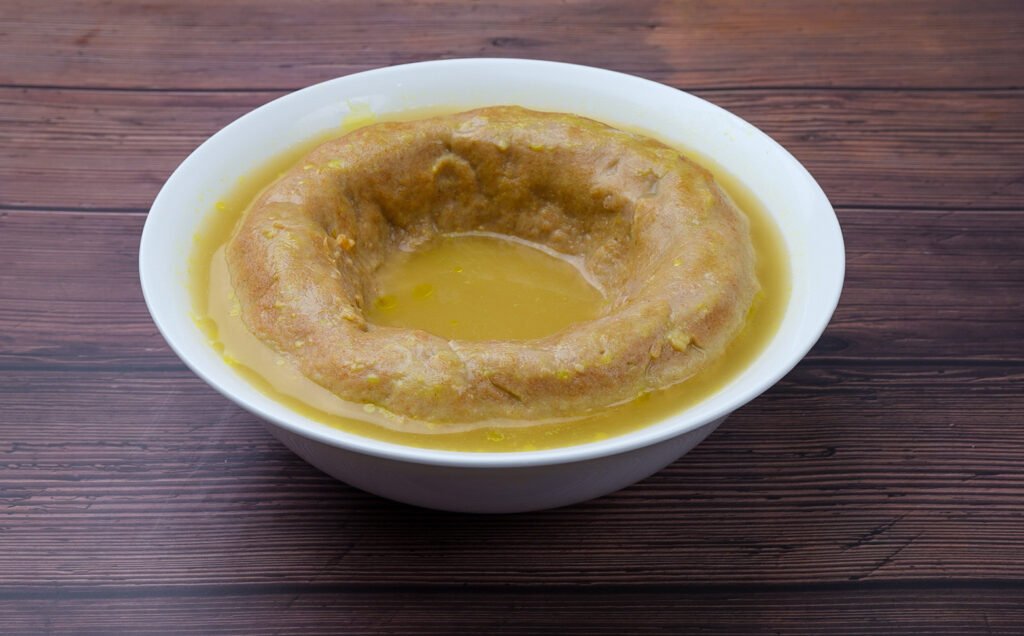
Asida is considered one of the most famous traditional dishes connected to Bedouin life in many parts of Egypt. It also holds a special place in Siwa Oasis, where it is known as one of the most popular traditional foods that reflects the history and authentic culture of the region. Asida has an important place in Bedouin heritage and is often served as a main dish during social gatherings and celebrations.
For a long time, Asida has been known as a food that gives the body energy and warmth, especially during cold weather and desert life conditions. It is also easy to prepare and has good nutritional value, making it suitable for both adults and children.
Asida is usually made from flour or ground wheat mixed with water. It is cooked until it becomes soft and thick, then served in different ways depending on local traditions.
In some areas, local butter or honey is added, while in other places it is served with milk or dates, giving it different flavors that suit many tastes.
In Siwa Oasis, Asida is strongly connected to family gatherings and special occasions. Local people prepare it during holidays and traditional celebrations because it represents sharing, generosity, and hospitality.
Asida is not only a traditional food, but also an important part of the cultural and social heritage. It reflects the old way of life and the traditions passed down through generations. It also shows how desert people create filling and special meals using simple local ingredients.
Asida remains one of the most famous traditional dishes connected to Bedouin heritage and Siwa Oasis. It is a symbol of authenticity that is still present today, keeping its place as an important part of the cultural identity and heritage of the desert people.